How can outdoor spaces be illuminated effectively?
Outdoor lighting goes beyond simply installing a few lights in a yard or garden. A well-planned design should not only provide necessary illumination but also highlight the architectural beauty of the building and the surrounding greenery. Poor fixture selection, excessive brightness, or improper placement can lead to glare, unwanted shadows, and increased energy consumption. To achieve professional-quality lighting, consider these five key principles:
1. Define the lighting objective
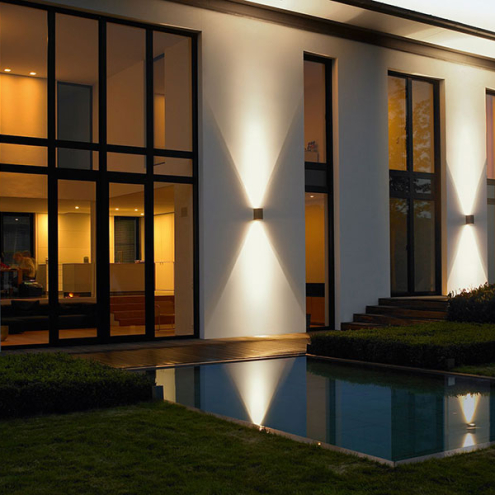
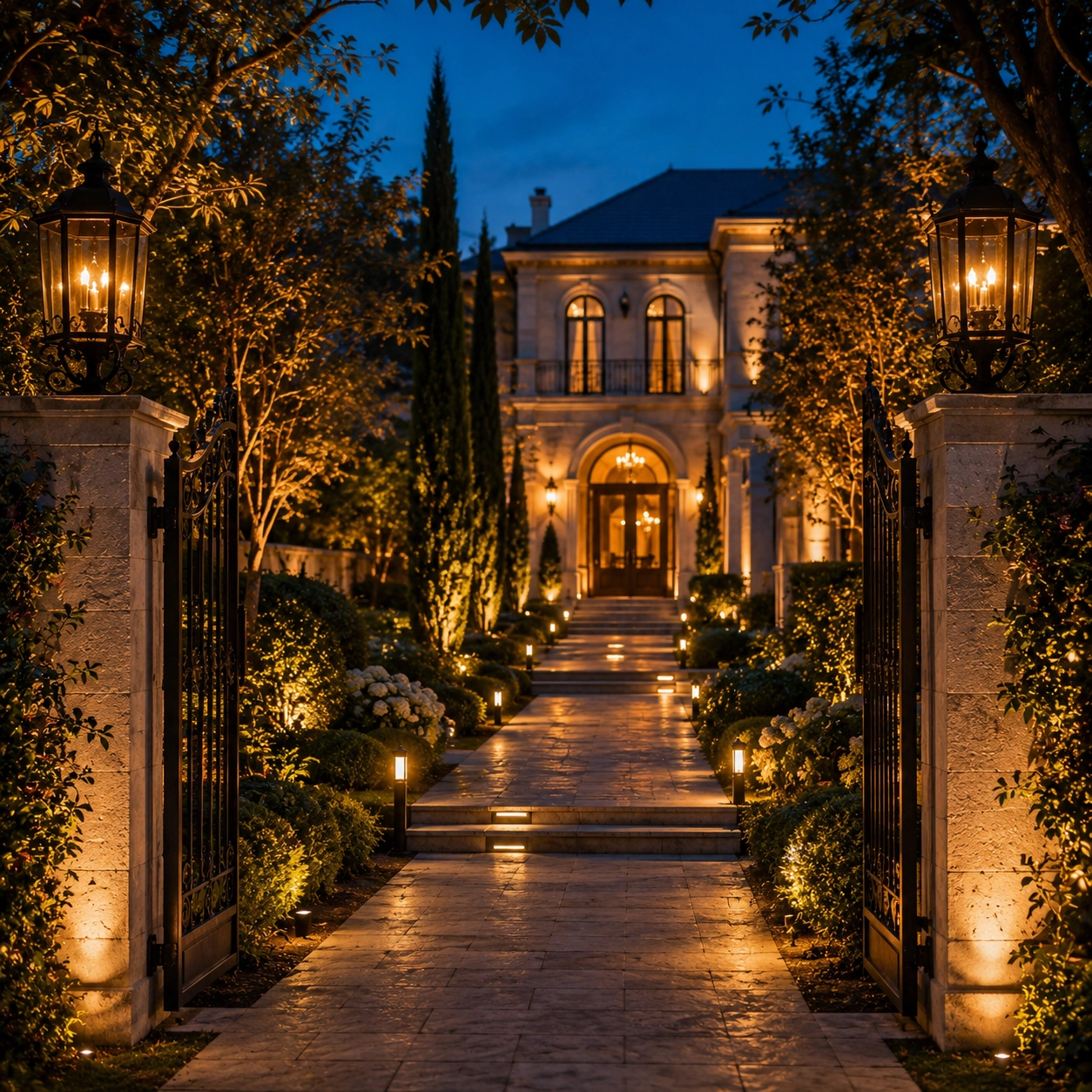
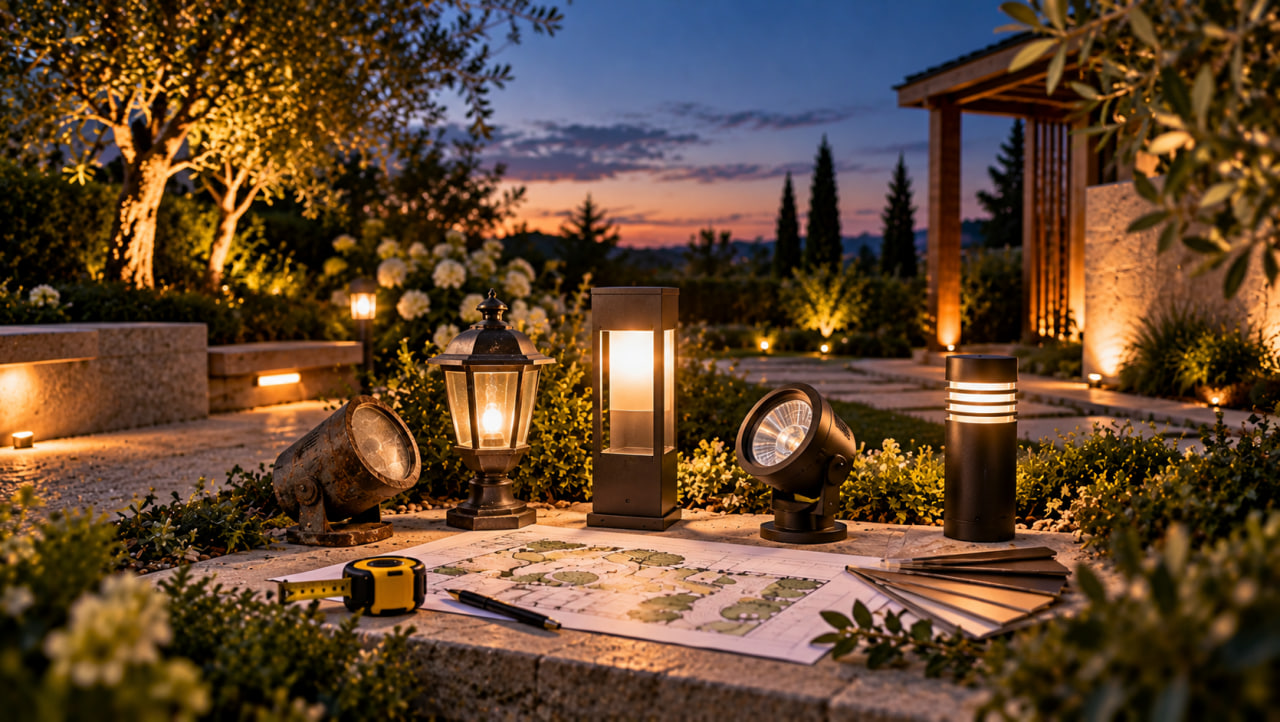
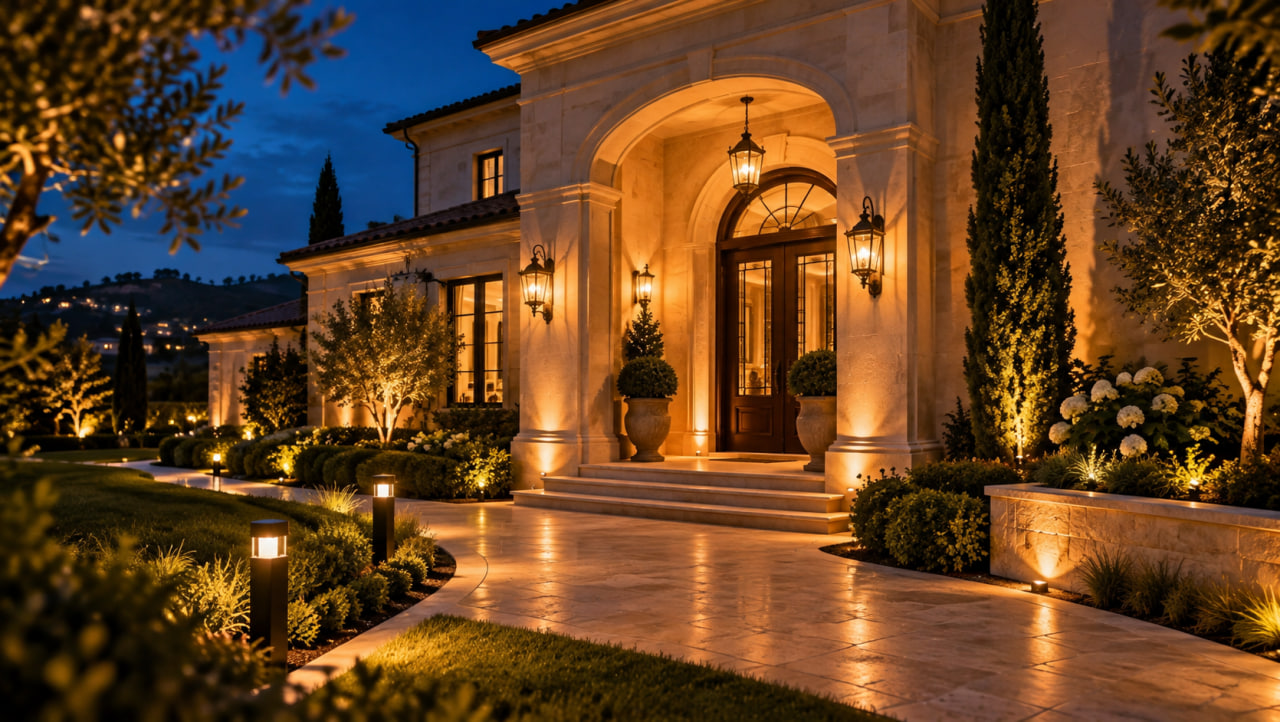
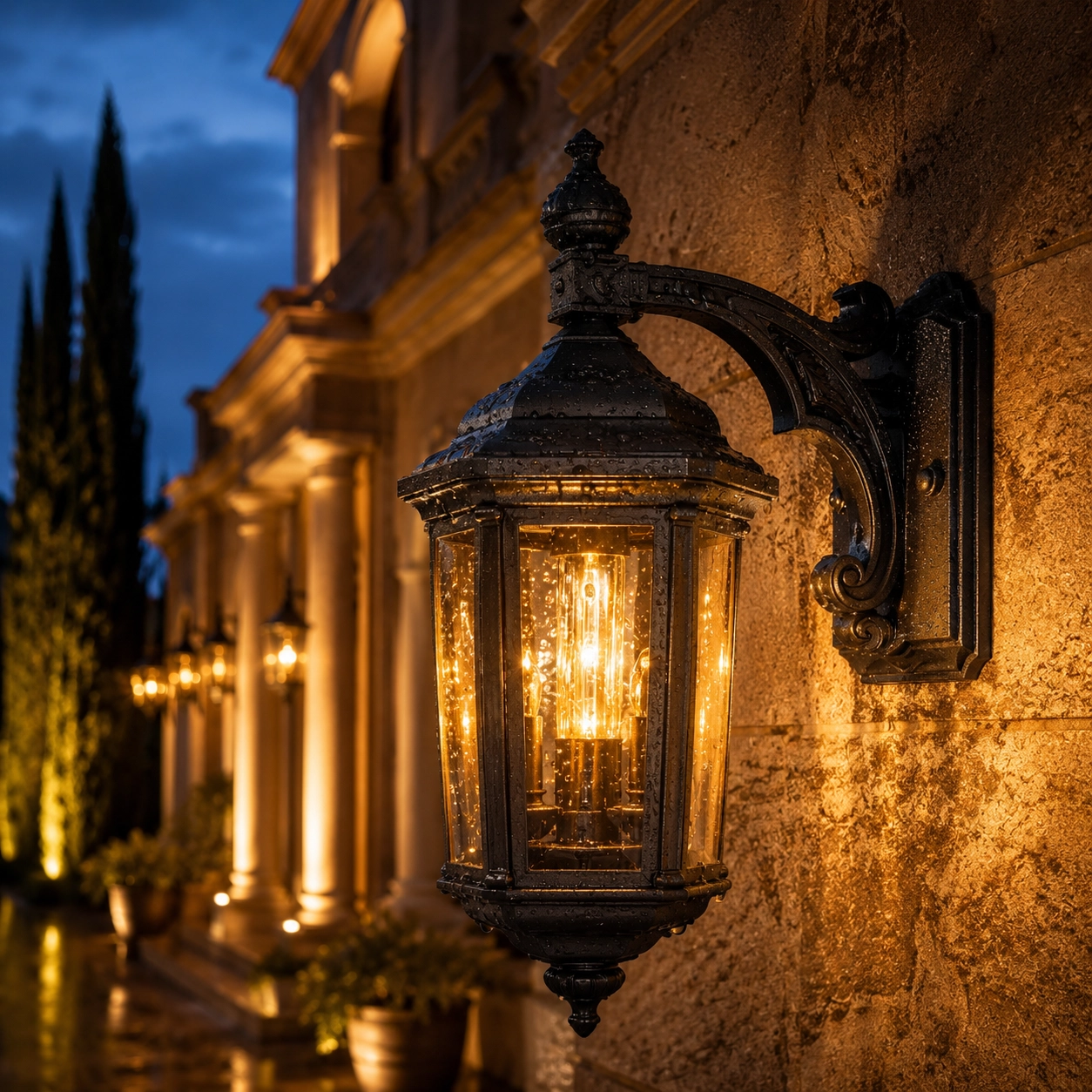
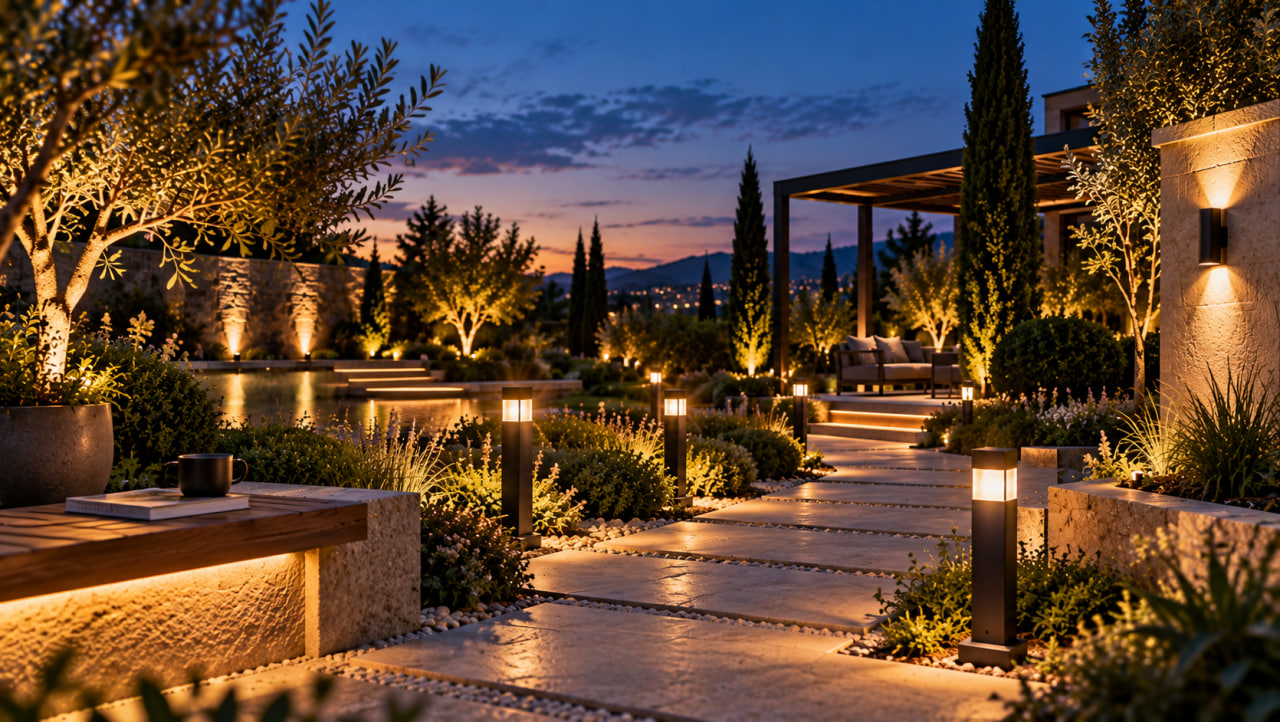
The first step is to determine the function of each area. Walkways, building entrances, garden beds, and seating areas all require different lighting approaches. For instance, low-profile bollard lights are ideal for marking garden paths, whereas wall-mounted fixtures can illuminate building entrances. In decorative areas, accent lighting can be used to highlight trees and architectural features.
2. Choose the right light color
Light color directly influences the atmosphere and appearance of the environment. Warm light (with a color temperature of approximately 2700–3000 Kelvin) creates a cozy, relaxing ambiance suitable for gardens, villas, and residential grounds. Neutral "natural" light (around 4000 Kelvin) is often appropriate for pathways and entrances. It is best to coordinate the light color of adjacent fixtures to ensure a cohesive look.
3. Adjust light intensity to suit the environment
Using high-intensity lights does not always equate to better lighting. Excessive brightness can cause glare and detract from the area's aesthetic appeal. Conversely, insufficient lighting along walkways can compromise safety. When selecting fixtures, consider not only power consumption but also luminous flux (measured in lumens), beam angle, and mounting height.
4. Determine the placement and spacing of lights strategically
Proper light placement plays a crucial role in achieving uniform illumination. Spacing lights too far apart can create dark spots, while placing them too close together may result in excessive brightness. It is best to select pathway, wall, and garden lights based on the area's dimensions, mounting height, and light distribution pattern. Additionally, the beam angle should be adjusted so that light does not shine directly into people's eyes.
5. Use durable, energy-efficient lights
Outdoor lights are exposed to rain, dust, and temperature fluctuations. Therefore, selecting a product with an appropriate IP rating and a durable housing is essential. IP65-rated lights are a suitable choice for many outdoor environments. Using high-efficiency LED light sources can also help reduce electricity consumption and maintenance costs.
Conclusion
Effective lighting for courtyards and gardens is the result of choosing the right fixtures and paying attention to design details. By defining the lighting objective, selecting appropriate light color and intensity, ensuring correct placement, and using high-quality equipment, you can create a space that is beautiful, safe, and architecturally harmonious. When selecting the right lights, it is advisable to review product specifications to ensure they align with environmental conditions and your specific lighting needs.




نظرات
هنوز نظری ثبت نشده است.